That Pessoa Blonde
Thursday, October 29, 2009
 This morning I finished August Heat, the tenth in the series of 16 novels by Andrea Camilleri featuring Inspector Salvo Montalbano. Ths means I must now wait for Andrea Camilleri’s translator, Stephen Sartarelli to translate the 6 remaining Inspector Salvo Montalbano novels. I made a decision today that I am going to read at least one work by Portuguese poet Fernando Pessoa ( 1888 – 1935) because after having read so many novels by José Saramago including The Year of the Death of Ricardo Reis (Ricardo Reis was one of the many heteronyms for Pessoa) I have realized that no Pessoa in my head must be equal to a big vacancy of important content. What finally pushed me to make the decision is a Pessoa quatrain that sings in Salvo Montalbano’s head in August Heat: And as the girl approached and her features, eyes, and hair colour became more and more distinct, the inspector slowly stood up, feeling himself happily drowning in a sort of blissful nothingness. 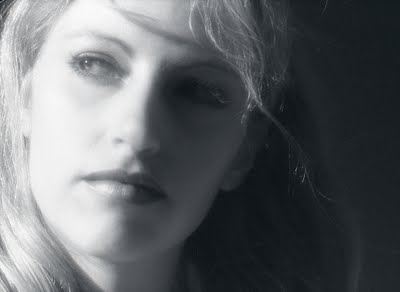 Head of pale gold Head of pale gold
With eyes of sky blue,
Who gave you the power
To make me no longer myself?
The Gun
Wednesday, October 28, 2009
 When I first came to Canada in 1975 wanting to become a professional photographer I decided that there were some things I would never do. I vowed to never shoot a wedding, babies or pornography.
I can recall shooting Susan Musgrave getting married to her bank robber beau at a maximum security prison in Agassiz and the first wedding of DOA's singer/guitarist Joey Shithead. I have taken picture of both of my granddaughters after they were born and as they grew. I must admit that I changed my mind about pornography and I attempted to shoot some. Every time an inner "good taste" valve took over and I was unable to go through it or to get results that bordered on pornography. I thought I was being daring in taking individual portraits in sequence (just the face) of two different women going through self-induced orgasm. But I was astounded by several irate complaints from women friends who were annoyed, almost insulted, that I had not asked them to pose.
But here you will find one of the strongest photographs I have ever taken. I took only two versions of it. In one the young man with the gun is looking at the camera and the other is the version you see here. A prominent journalist friend of mine owned the Webley. I was told to be careful when I transported it to my destination, a parked railway parlour car on the CP Railyard. If I were to be stopped by a policeman I was not to divulge who the owner was as it was unlicensed. Fortunately nothing like that happened.
A Postcard To That Renaissance Man
Tuesday, October 27, 2009
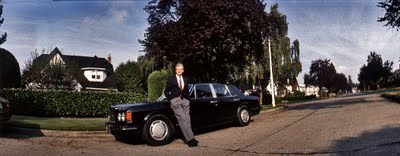 WRITE YOU ARE: In the midst of today's electronic-messaging blizzard, including his own www.alexwaterhousehayward.com website, photographer Alex Waterhouse-Hayward has adopted a medium as old as the Pony Express. He's sending hand-written promotional postcards via Canada Post to corporate, institutional, political and cultural biggies he's portrayed for a generation. Showing the photographer's work on one side, the postcards were produced by George Kallas's Metropolitan Fine Printers firm, which routinely wins international awards.
Do postcards work? In his Confessions Of An Advertising Man memoir, David Ogilvy recalled being the greenhorn in a 1930s British ad agency and pestering to handle a campaign. Others scoffed when he got a hotel account worth 100 pounds. Ogilvy spent the sum -- paltry even then -- on stamps and postcards, which he filled out. The hotel filled every room, and Ogilvy went on to found the Ogilvy, Benson and Mather agency and become an ad-biz legend.
Malcolm Parry, Vancouver Sun, October 22, 2009
A week and a half ago I sent Vancouver Sun columnist Malcolm Parry a postcard. He did not acknowledge receipt. He did one better. He wrote about it in his October 22 business column and even included one of my self portraits. It that wasn't enough the Wednesday Vancouver Sun previewed it on the front of the business page and included that self portrait.
With the struggle that any photographer based in Vancouver has to go through now that the-best-price-is-free mentality of the web this was was like an electrical shock on my dying body's chest. Who knows it just might help. But then Mac (as those of us from his earlier incarnation (read his bio below to find out about his several incarnations) call him has always been there for me. He pretty well gave me my first photo job in Vancouver and even saw in me a writer of sorts. If I say that I have a godfather in Vancouver it would have to be Mac.
Malcolm Parry was born and educated in England, where he studied civil engineering and worked as a part time musician playing the saxophone.
In Canada he worked as a commercial and industrial photographer and later as the advertising and public relations manager of a telecommunications manufacturing division of New York based General Telephone and Electronics International, now the Verizon Corporation. He also freelanced extensively as a writer and photographer for regional and national newspapers and periodicals in Canada.
In 1970 he was the founding editor and later publisher of the Vancouver-based buisness periodical B.C. Affairs and founding editor/publisher of its spinoff periodical B.C. Industry Reports. In 1974 he was founding editor and later publisher of the city monthly periodical Vancouver Magazine. He remained editor for two terms totalling 15 years, during which time he, the magazine and its contributors won many regional and national and some international awards.
During that period he was founding executive editor of Edmonton and Calgary Magazines and of the B.C. business periodical Equity. For briefer periods he was editor of Western Living magazine, which publishes editions in B.C. Alberta Saskatchewan and Manitoba, and was also editor of a Vancouver city affairs publication titled V.
He was founding editor of the Toronto based business magazine Vista, where he won a national award for art direction.
A Vancouver Sun columnist since 1991, he has written about all manner of social, cultural,entertainment, business, education and political doings and has photographed for publication some 1200 individuals.
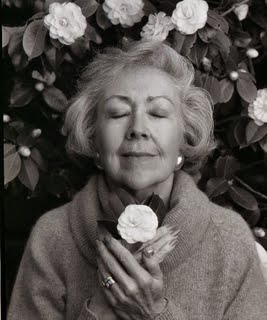
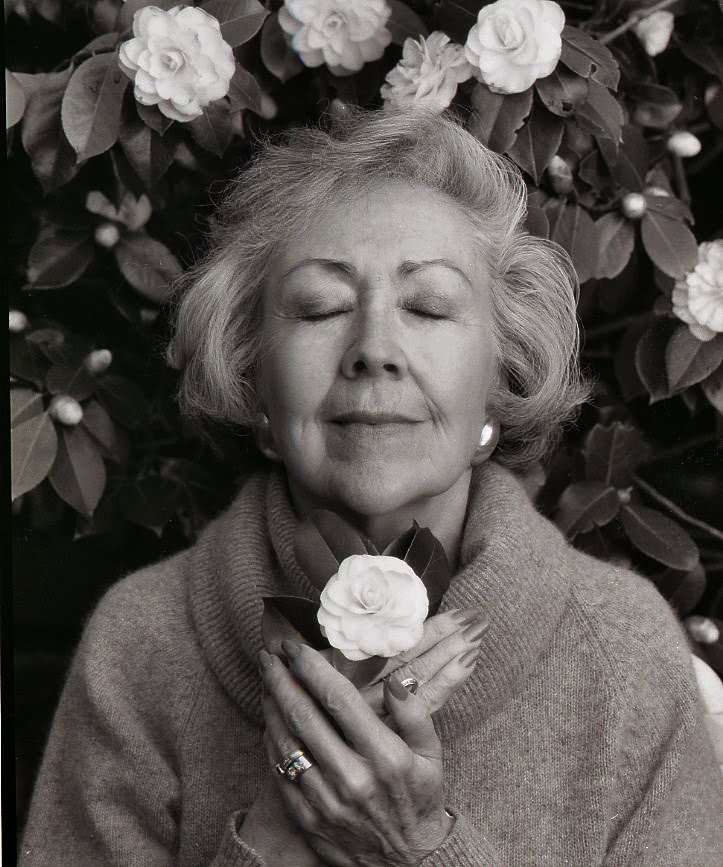
In early spring (note the white camellias) of 1992 I photographed the former fashion columnist for the Vancouver Province, Kay Alsop. Everybody at the time was commenting on what was then the hottest topic in town. This was Malcolm Parry's gossip colum Town Talk. I asked Alsop what she thought of Parry. She said, "Mac is going to turn off the lights at the Sun."
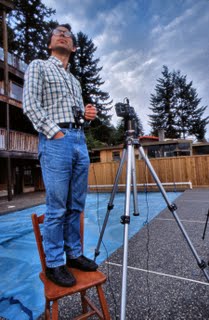
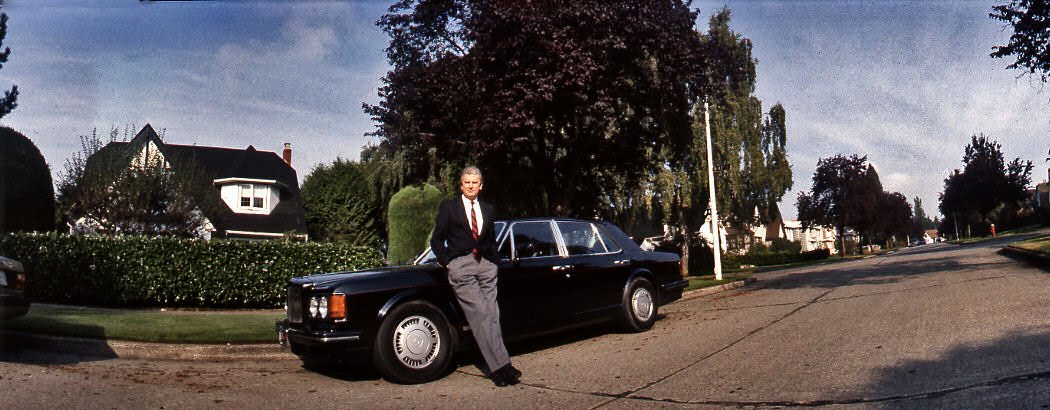
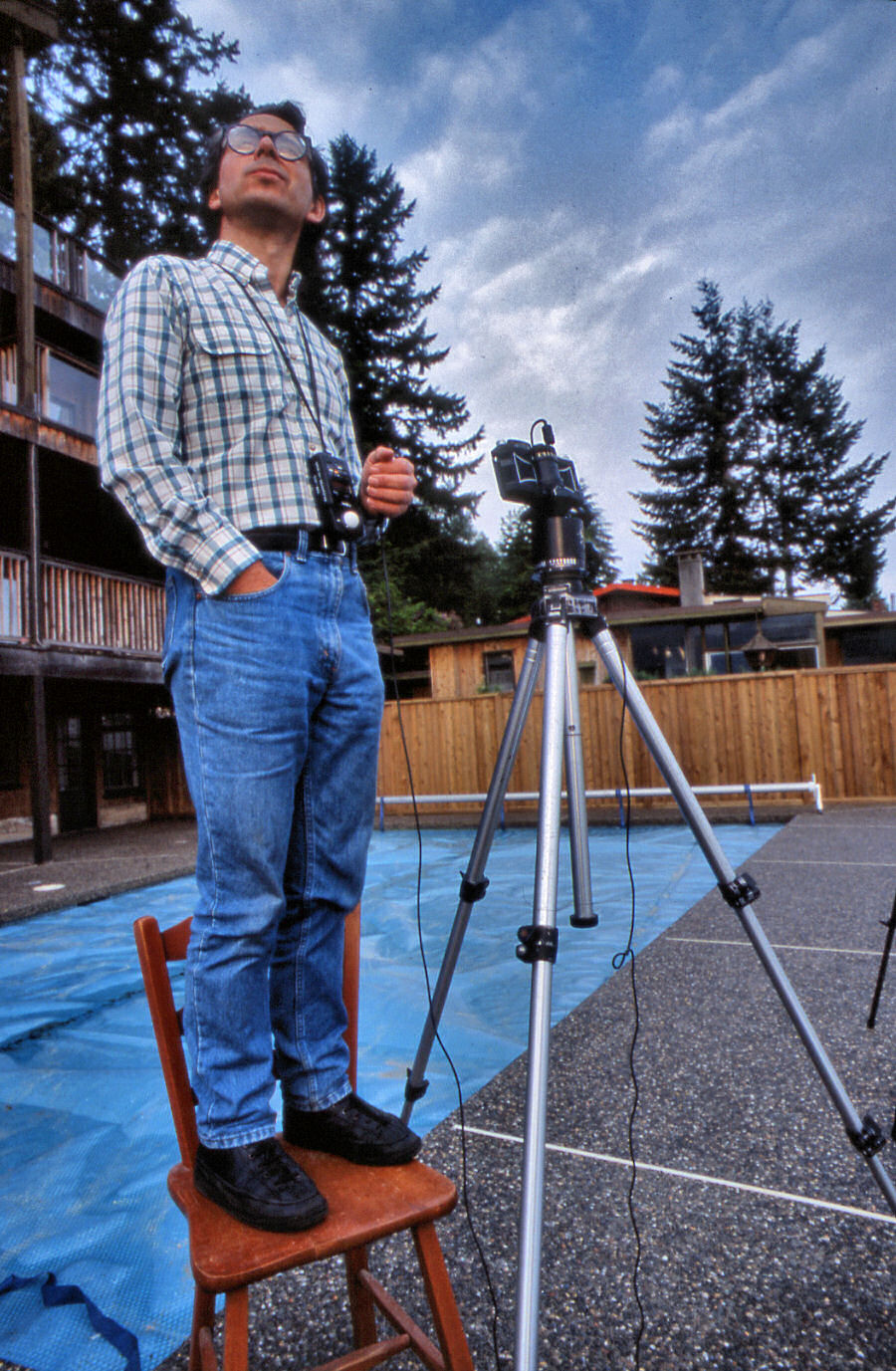
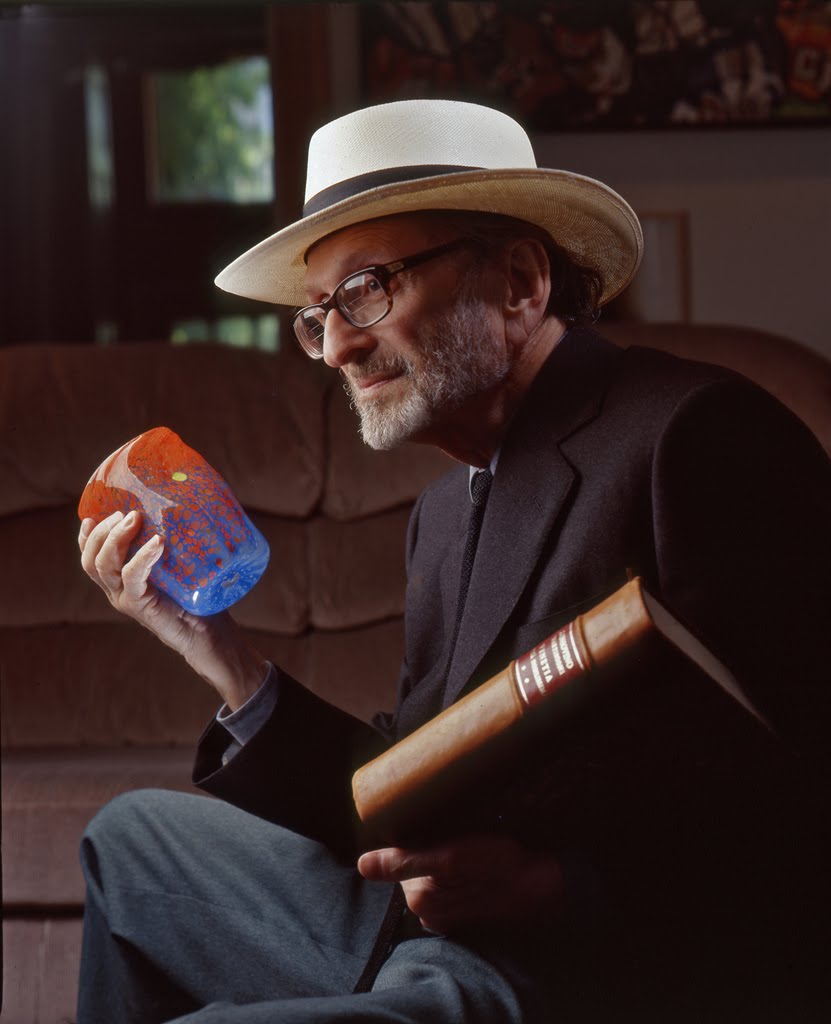
Coming home with my friend John Lekich from an evening with Stephen Sondheim at the Vogue (expertly and quietly moderated by the former theatre reviewer of the Province, Jerry Wasserman) I told Lekich the Kay Alsop story. John's comment was, "She just might be prophetic." I might believe that. But I also believe Mac will find something else to occupy his time. He has plenty of talents to choose from. As a photographer he could certainly give me a run for my money. The picture here of me he took in his backyard around 1990.
¡Gracias padrino!
English Elegance & Margaret Merril Say Goodbye
Monday, October 26, 2009
My grandmother taught me a lot, not only because she had been a teacher at Assumption College in Manila in the 20s and 30s but because she was ahead of her time in believing that nobody was ever too young to learn. I remember the first time she mentioned, “Se despidieron a la francesa.” “They said goodbye, French style.” Some guests at a party my grandmother had given had suddenly disappeared. I was 8 or 9 and a bit curious so I asked her what this meant.
She told me that during the Napoleonic wars Napoleon had made his older brother Joseph, king of Spain (Joseph I) in 1806. In 1813 Wellington and his English and Portuguese forces defeated the French army at Vitoria and Joseph was gone after trying to abdicate. My grandmother explained, “The French left so quickly they forgot to say goodbye. And even today the Spanish still use the expression when people are rude in their farewells.”
What is most interesting is that Joseph went to live in the United States. He first settled in New York City and Philadelphia but finally settled in Bordentown, New Jersey before returning to Europe in the early 20s.
To this day in Spain and in my Buenos Aires anybody who is a bit of a fop or a dandy is called un afrancesado or Frenchified.
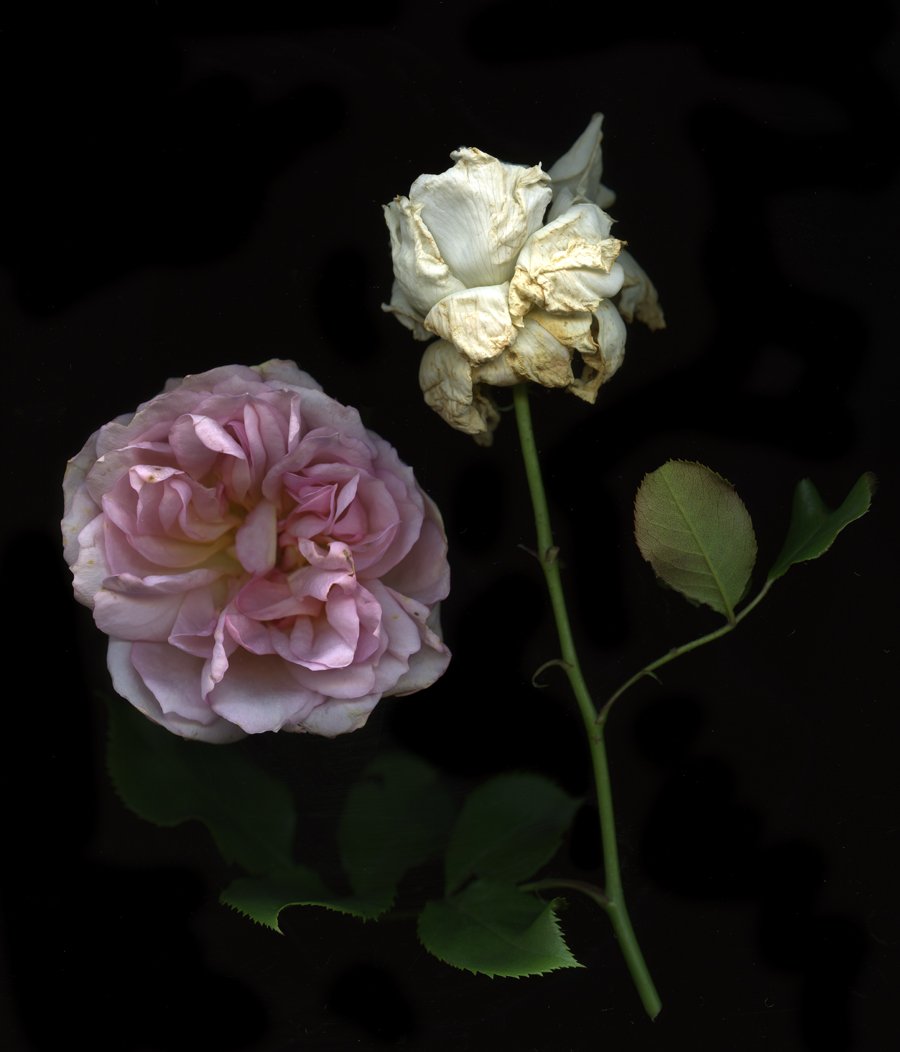
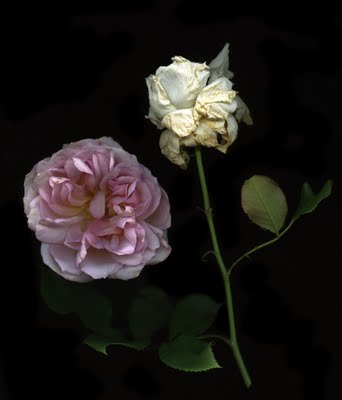
The two roses here I scanned today. The pink one is Rosa ‘English Elegance’ most elegant even at this later date. The white one is Margaret Merril a bit ruffled and roughed up by today’s wind. The former is a David Austin English Rose and the second is a Harkness floribunda. It is also bred in England.
My Spanish grandmother (who was an Anglophile) would have gleefully pointed out that these two roses indeed have good manners as they have said goodbye before leaving us, as winter (or what seems like winter) settled in today.
That Profane Urbanist's Home
Sunday, October 25, 2009
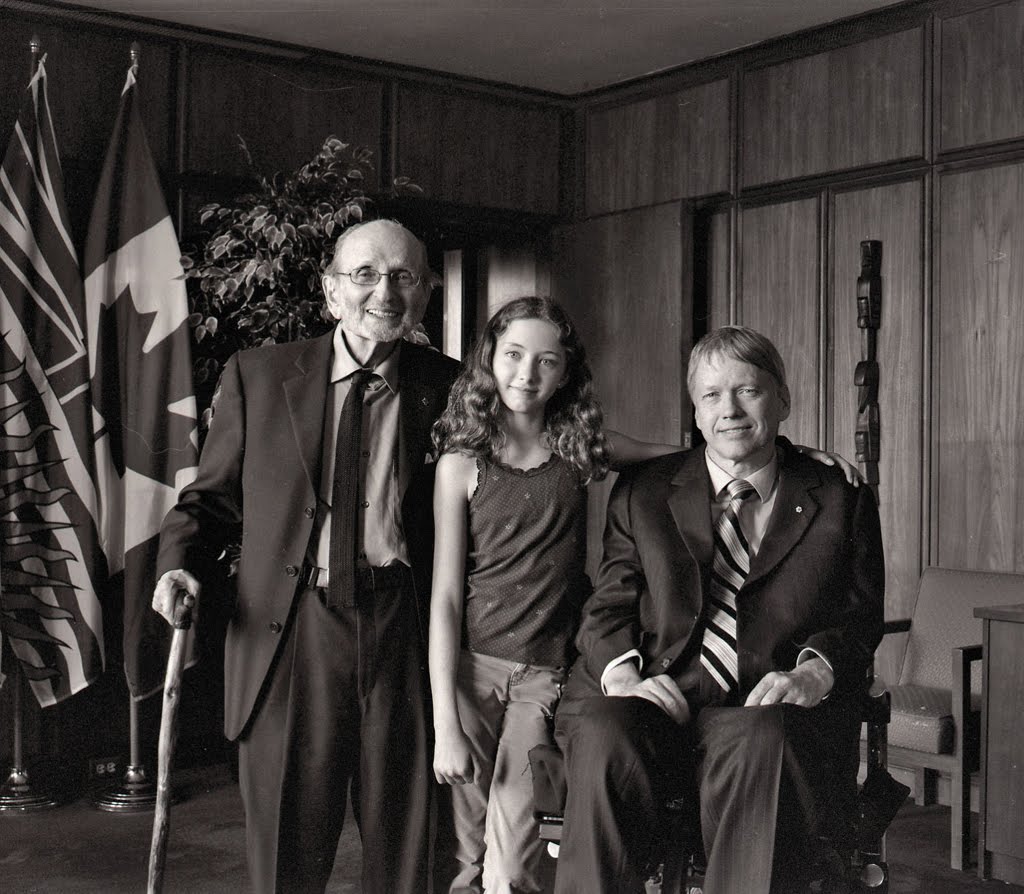
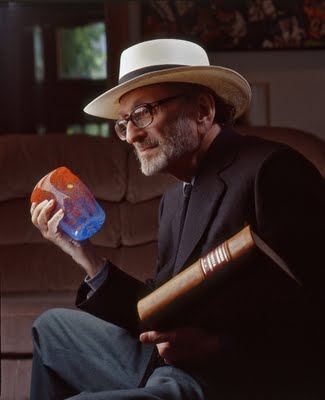 My grandmother who lived in Valencia, Sevilla, Madrid, Manila, the Bronx, Buenos Aires, Mexico City and Veracruz spoke of all those places with delight but I never had a sense that she felt she belonged to any of them. She had moved too many times. “Her two “camphor babies” were her home,” my mother used to say. These were intricately carved chests that traveled with her since the early 30s. The two chests are in my living room and they are a constant reminder of the only grandmother I ever knew and loved. Inside those chests are a collection of Spanish fans, shawls, my Mappin & Web birth spoon and other mementos of the life of my grandmother, grandfather, my mother and me. In 1957, that first year that I was at St. Edward’s High School I was not quite 16 and I had never left home. Suddenly I was in Austin, Texas in a large neo-Gothic dormitory and our dorm prefect, Brother Vincent De Paul CSC would throw a silver dollar on our bed. If the dollar did not bounce he would lift the mattress and throw it on the floor. We went to the bathroom in a large communal one and privacy was only present at night when we lay in our beds. Our thoughts were then our own. A piece of home was my locked metal chest, a cheap one my mother had purchased at an army surplus store on South Congress Avenue just one side, north, of the Congress Avenue Bridge. Nobody could open my chest and what was inside I shared with nobody. It was home. It wasn’t a camphor baby, but it was home, nonetheless. Like my grandmother I have been around. Even though I lived in Vancouver since 1975 it often feels like a city I am visiting and that I am a tourist. I have come to understand the significance of the fact that both my granddaughters, Rebecca, 12, and Lauren, 7, were born in Vancouver. They have not moved from it. This is their home. This is their city. And best of all they belong here. I am not sure I can say that about myself and my relation to this city. Today Rebecca and I attended a celebratory memorial to Abraham Rogatnick held at the Great Hall of the Vancouver Law Courts. I wanted her to accompany me not only because Abraham Rogatnick, Rebecca and I had attended many baroque concerts (particularly those Friday evenings at St. James Anglican complete with Oreos, tea and coffee) and spent time in my summer garden drinking iced tea and enjoying the June roses. I wanted Rebecca to be with me because she would meet many of the people who made Vancouver the city it is today. Being part of a city is to feel urbanity for it. Abraham Rogatnick, the architect, brought together, under one roof today many urbanists, artists, politicians, composers, jewelers, actors, all that much more urbane for having met that ultimately urbane man that he was in spite of his often off-colour profanity when something got his goat. And so Rebecca chatted with Cornelia Oberlander and Edith Eglauer, and Tom Cone. There was Gavin Walker, Dorothy Barkley, Geoff Massey, Sam Sullivan and many more. She heard Peter Busby talk about Rogatnick the teacher, perhaps feeling just a bit guilty about her rejecting his little lecture on art deco architecture in Mayor Sam Sullivan’s office one afternoon a year ago. 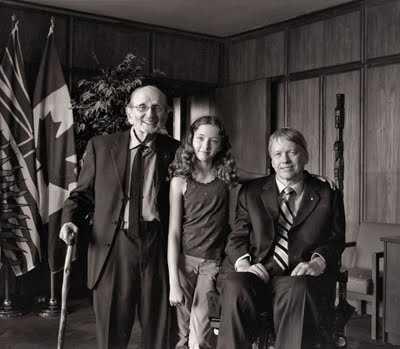 I explained to Rebecca how the man she had met and chatted with many times, Arthur Erickson had built Robson Square, the law courts and adapted the old court house to be our Vancouver Art Gallery. I explained how Cornelia Oberlander had done the landscape architecture. I didn't want to transfer my superstitious beliefs to her so I didn't tell her that I felt the presence of those two friends and ghosts, Erickson and Rogatnick who were hovering about as we sampled our éclairs. A confirmed atheist, Abraham Rogatnick, would have said to me, "Don't fill Rebecca with all that crap." If Rebecca and Lauren’s luck persists they will never have to call a chest, be it of precious oriental wood or cheap tin, home. Home, for them, will be Vancouver, a city, all the better for having been a home for Abraham Rogatnick and his companion Alvin Balkind since 1954.
Saturday, October 24, 2009
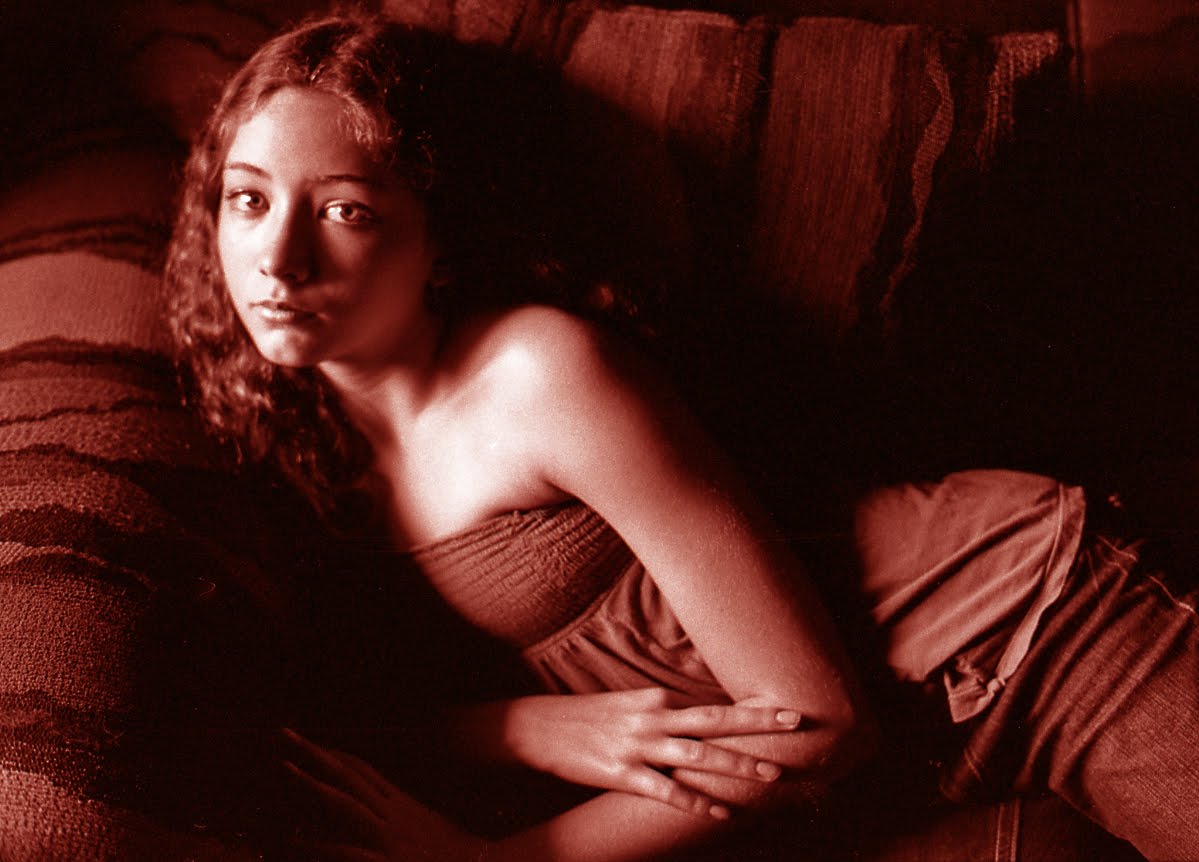
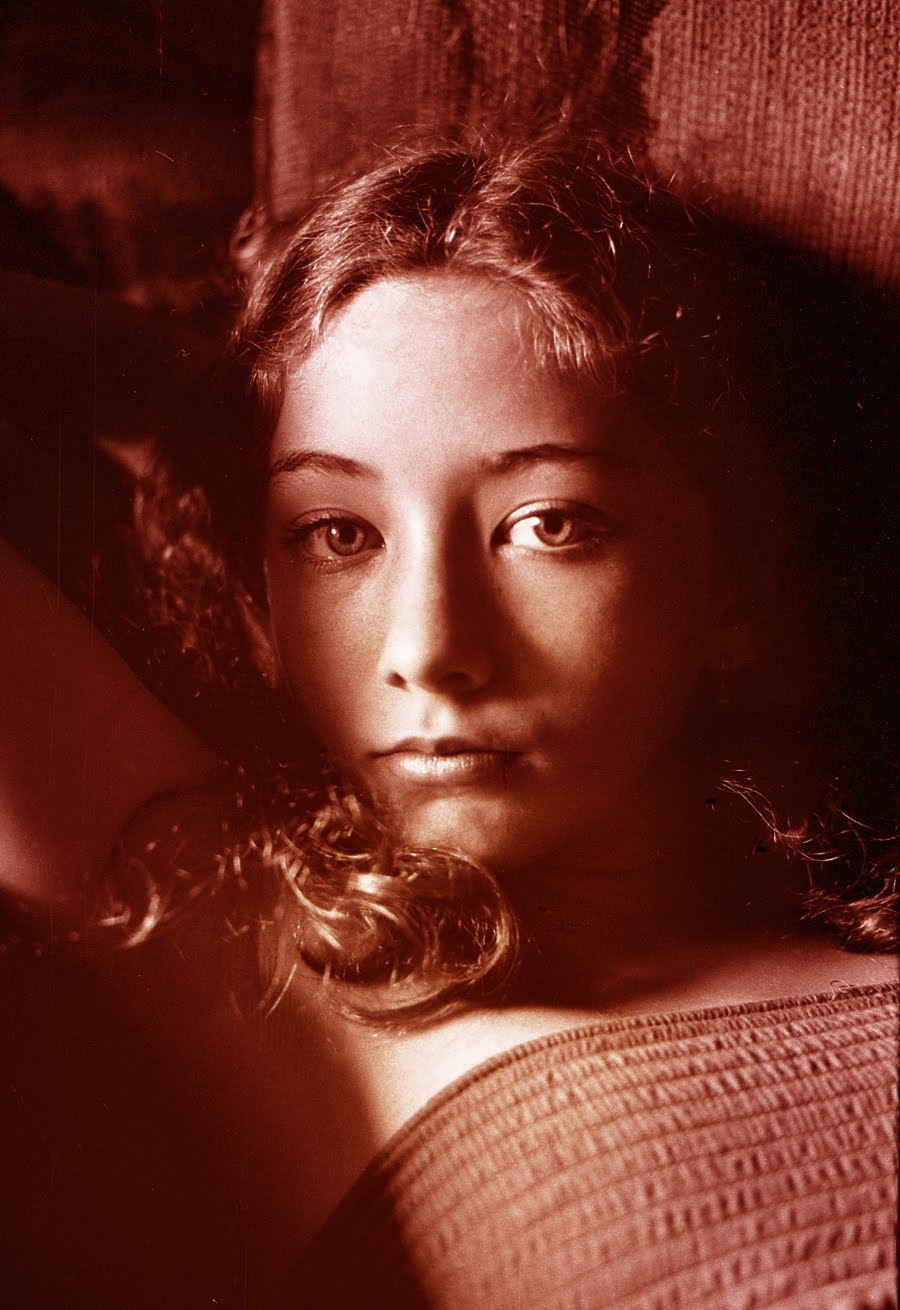
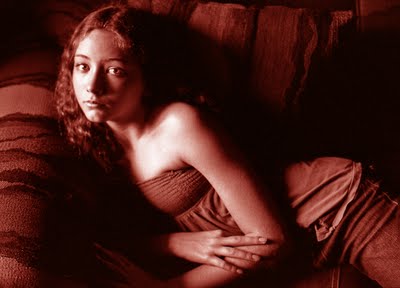 It was at St. Edward’s High School in my Junior year that Brother Dunstan taught me about catharsis. He told us that the ancient Greeks went to see tragedies knowing exactly what the resolution would be yet they would not be sure of the details. At some point during the play, or right after, the audience (and the actors, too) would experience a a satisfying purging of their emotions which Aristotle named a catharsis. This is why plays are so useful in explaining to us the intricacies of our emotions and how they play in our life. I sat with Rebecca tonight watching the Playhouse Theatre Company Production of The Miracle Worker, beautifully directed, just right by Meg Roe. From our second row seats we were able to discern every emotion, every tick, every gesture of the actors including the exceptional young girl, Margot Berner who plays Helen Keller. At the point where Helen Keller makes that important connection between the sign language spelling of water with the water itself (and is finally able to think through the discovery and use of language, I could feel tears running down. It was Brother Dunstan’s catharsis. In the car Rebecca said (showing me a Kleenex with black smudge marks), “I should get my money back on this Maybelline makeup, it runs.” “Did you experience a catharsis?” (I had explained to Rebecca the concept.) I asked her. “It’s none of your business,” she answered. I drove home with a smile thinking about Brother Dunstan and how lucky I was to have had him for a teacher and how lucky to have Rebecca as my granddaughter. 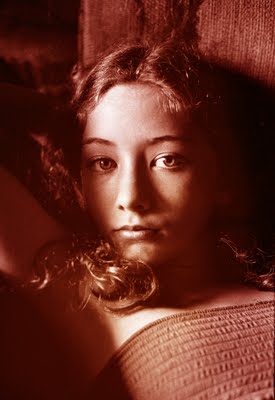 I took the pictures of Rebecca here today after lunch using a hefty Nikon F-3 loaded with Kodak Tri-X. The lens was a 50mm f-1.4 and my exposure was f-2.8 at 1/60 second. Holding that solid F-3 and listening to the "I-mean-business" motor drive was a catharsis in itself.
Friday, October 23, 2009
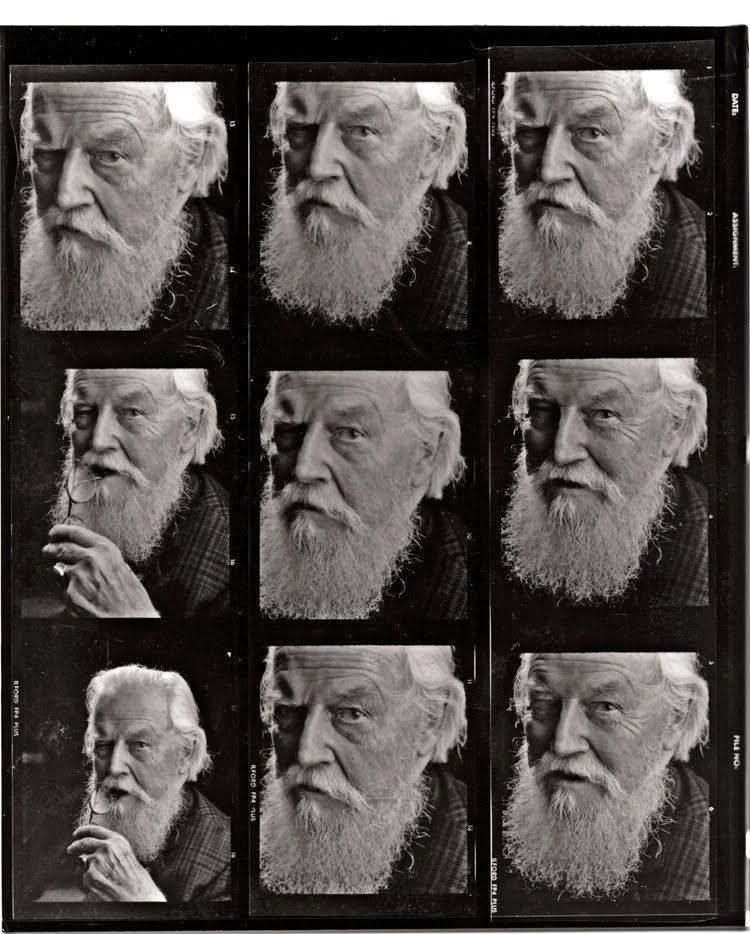
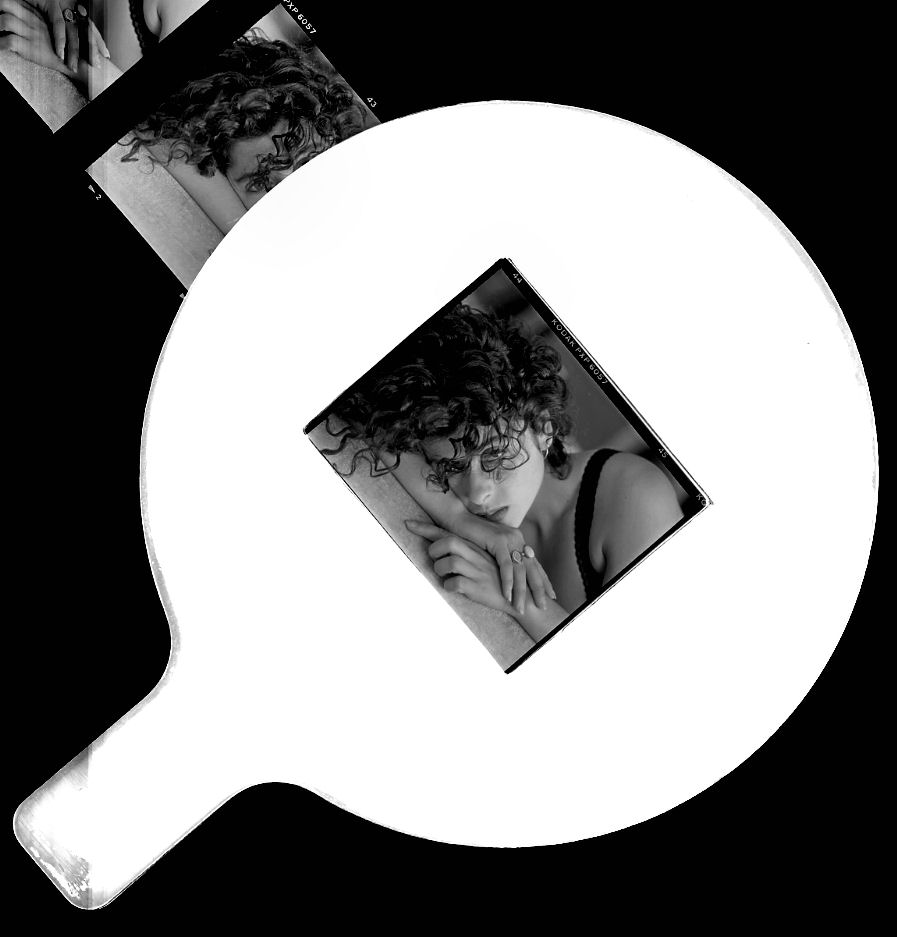
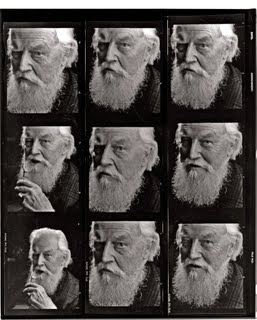
Just a couple of days ago I sold a photograph of Robertson Davies to a Barcelona publisher. I have been dealing with with a M. Àngels whom I suspect is a woman called María de los Ángeles. She refuses to reply to my Spanish and sends me letters in French. But she did indicate in English, “We are interested about the attached image. This is the mosaic of faces.” The picture in question is a scanned contact sheet. She must be young enough to have not concept (and this is most understandable) as to how we photographers used to (and some of us still do) make contact sheets in the darkroom. I have become a tad lazy about making contact sheets in the darkroom since I can scan the negatives in a sleeve and get just about the same thing without mixing any chemicals. I have to admit it is convenient.
It has all made me think how the language of photography has changed and the hidden messages the language changes convey. A friend of mine from Mexico used to say, “I am going to make a photograph.” I thought it a bit too much in the same way I prefer the use of the word photograph to the slightly more pretentious image. I like to say I take photographs or I take pictures. The modern term now is to capture a photograph (and more often) to capture an image.
Because that captured image does not remain in the camera for long as modern photographers chimp (to look at the image in the back of the camera right after taking it) they are losing (to lose is a loss only when you realize what you are missing) the concept, that wonderful concept, of the latent image. This is about an image that is there even when you cannot see it. In the 19th century the term used was to develop or develop out the latent image. That perceived magic which is magnified when one sees a b+w print’s image emerge in a developer bath in the subdued reddish light of a darkroom an experience that is forgotten (if you once printed) or it is an experience never had if you never printed. As my students look at each other’s little screens I see the benefits. They are instant benefits.
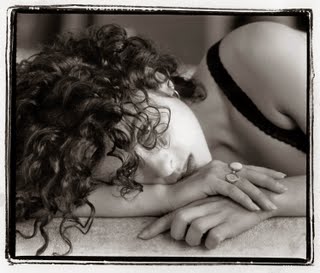
When one begins photography, be it digital or the other there is an important breakthrough that some photographers achieve and some that never realize of its possibility. The beginning photographer (I was one) relished going into the darkroom to print a negative or negatives. I would spend hours deciding on the crop. Should I remove this or that part of the negative? I may have spent a lot of money on sheets of photographic paper doing this. Then one day I decided I was going to crop in the camera and print the whole negative. What helped me in this is that I would decide that a picture could be a vertical and a horizontal and I would shoot both of them. This meant I never had to convert a horizontal to vertical by cropping it.
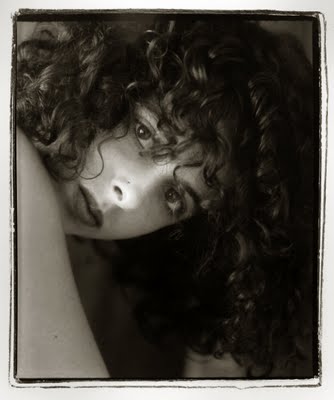
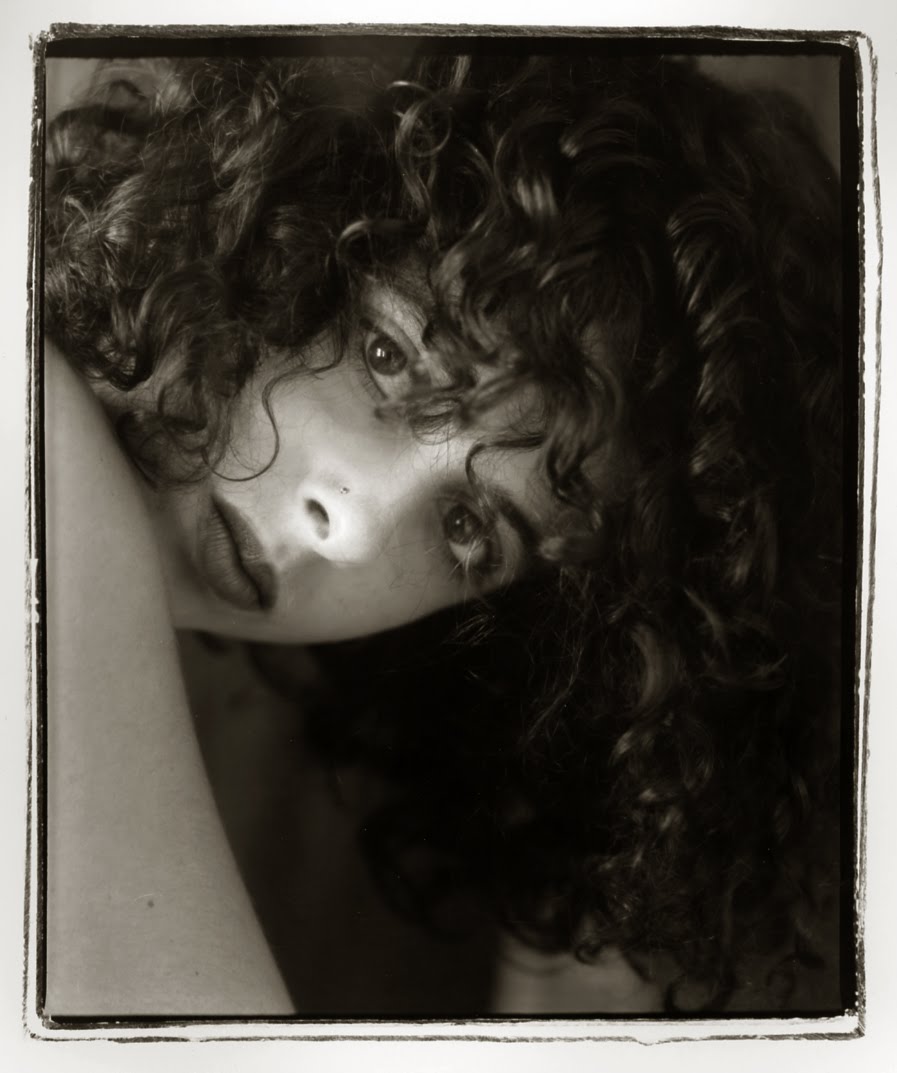
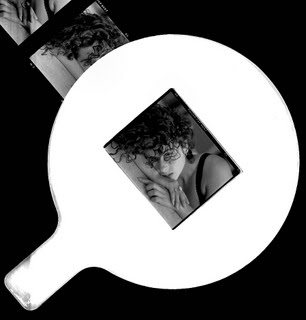
Photographers who printed their own negatives had a way of conveying that they printed 100% of the image of a negative. The method was to file (a metal file) the edges of the negative carrier. The edge would go a bit beyond the edge of the film negative and the roughness of the filing made the edge/border of the printed photograph a personal signature. No two negative holders could be identical. In the best of those past worlds the filed-edge border meant the photographer had printed the photograph.
But as soon as photography was digitized that border could be copied and inserted around any picture, be it cropped or not. For a while this happened until the memory of what the filed edge represented was lost. These Photoshop filed-edge-look borders are called crazy borders now. It is no different than not knowing what that crank that was inserted in 20s cars was supposed to be for.
So when you see my photographs here with that "crazy" border it means that I have real darkroom prints in my files or I have recently printed some. If the pictures do not have the border it means that I have scanned the negative.
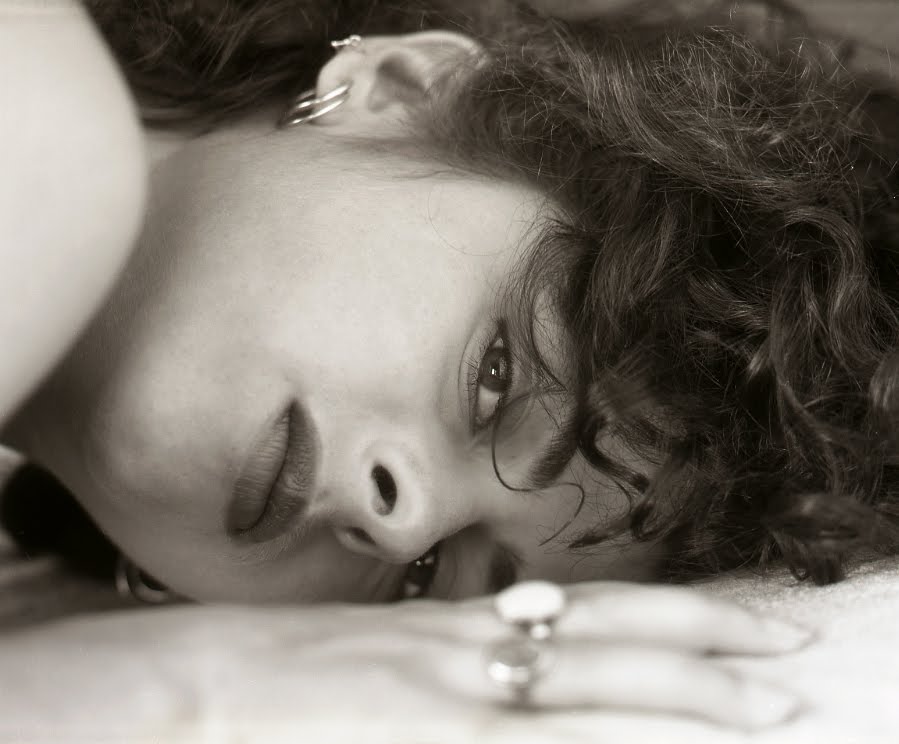
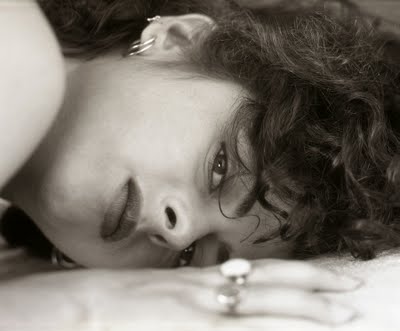
The pictures here are of Susan Fiedler. I wrote about her before here and here. 
I think I have to look for someone like Susan to inspire me to take some new photographs. Meanwhile I will not forget what do to with that crank if the motor does not start.
Latent image
Images of plants neither scanned nor photographed
That unkind cut
|